
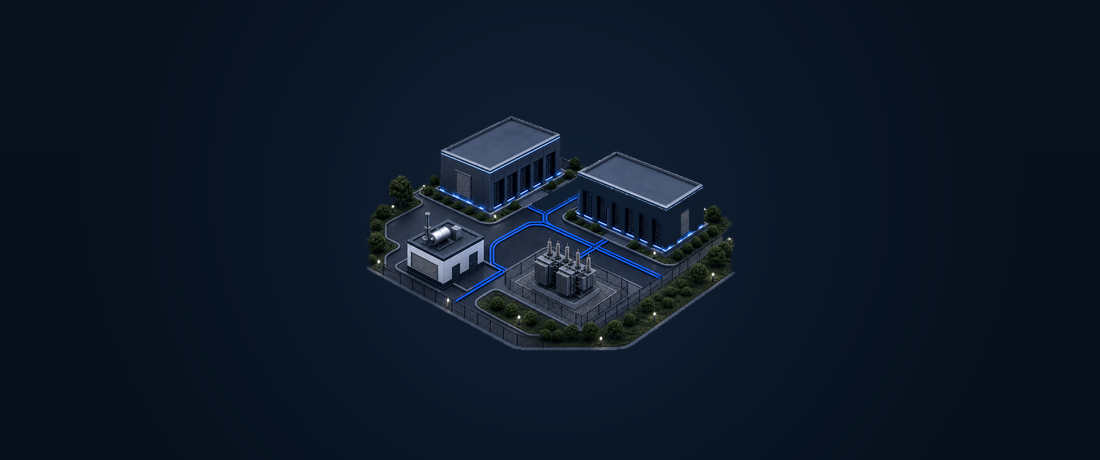
Capacity and phasing
Target capacity, expansion milestones, redundancy assumptions, and load ramp timing.
Westminister is developing captive-power structures for data center operators, cloud infrastructure firms, AI workloads, and colocation facilities.
Power requirement
Modern data center operators require dependable supply, scalability, resilience, cost visibility, and clear accountability. In emerging digital infrastructure markets, power strategy can determine whether an otherwise attractive project becomes financeable.
Westminister’s role is to help shape captive and behind-the-meter power models that are intended to match the operating profile of digital infrastructure assets.
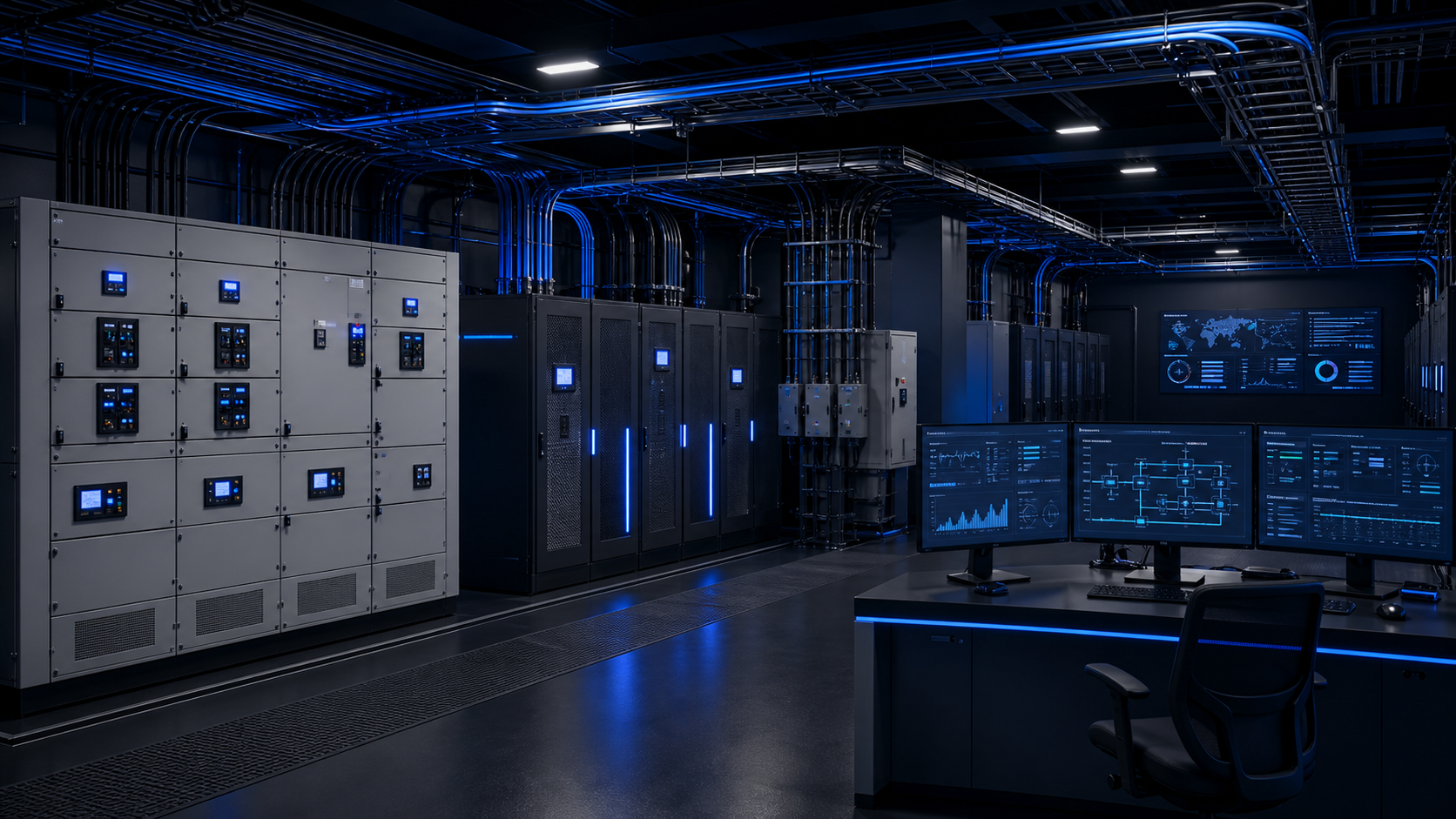
Solution models
| Model | Use case | Commercial note |
|---|---|---|
| Long-term power offtake | Operators with predictable load and long-term site strategy. | Terms would be subject to capacity, pricing, credit, and approval review. |
| Behind-the-meter captive generation | Facilities needing dedicated or semi-dedicated supply and resilience planning. | Generation, backup, fuel, interconnection, and operating responsibilities must be defined. |
| Energy-as-a-service | Operators seeking power delivery as an operating service rather than direct asset ownership. | Service levels, uptime obligations, and pricing mechanics require careful structuring. |
| Powered campus development | Multi-phase data center, cloud, or colocation campuses. | Best suited to phased growth, land coordination, and partner-led infrastructure planning. |
Operator diligence
Target capacity, expansion milestones, redundancy assumptions, and load ramp timing.
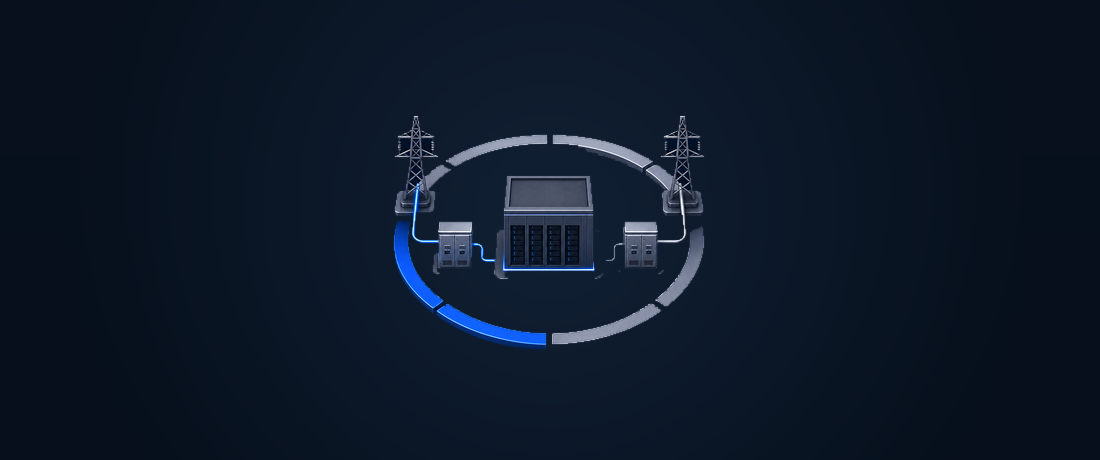
Generation mix, backup strategy, fuel and maintenance plans, service levels, and operational accountability.

Permitting, licensing, land, environmental, utility, and regulatory requirements, stated only as confirmed.
Technical diligence framework
Leading Nigeria and West Africa data center platforms publish evidence around power, uptime, security, certifications, connectivity, and efficiency. Westminister’s platform is organized around the same diligence categories, with final status stated only when verified.
| Diligence area | Why it matters | Westminister documentation |
|---|---|---|
| Power architecture | Operators need to understand how the facility will handle planned and unplanned grid or generation events. | Single-line diagrams, redundancy basis, transformer strategy, switchgear plan, backup assumptions, and phasing. |
| Power quality | Frequency stability, voltage quality, harmonics, and UPS interface can affect sensitive IT loads. | Power-quality design basis, monitoring plan, UPS interface notes, and equipment responsibility matrix. |
| Fuel or gas supply | Captive generation is only bankable when the primary energy source is secure and commercially understood. | Gas, diesel, hybrid, or other fuel assumptions; supply agreements; storage; contingency planning. |
| Efficiency and PUE path | Power cost and cooling efficiency influence operator economics and investor diligence. | Target efficiency assumptions, clean-energy options, cooling interface, and sensitivity model inputs. |
| Monitoring and DCIM | Operators expect continuous visibility into power, cooling, alarms, security, and service performance. | Monitoring architecture, reporting cadence, escalation process, and system ownership model. |
| Certifications and approvals | Certification and approval references support trust when status is verified. | Certification pathway, licensing tracker, regulatory counsel notes, and approved public status language. |